
How Restaurants Can Get More Five-Star Reviews — and Turn Better Hospitality Into More Sales
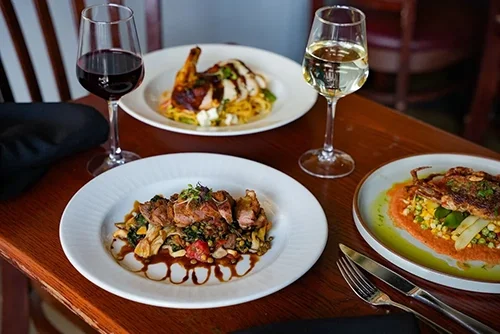
Photo by Maura Postlethwait
If your restaurant has less than stellar online ratings, spending more money on marketing may actually make the problem worse.
Marketing can bring more people through the door. But if guests are consistently disappointed once they arrive, more traffic simply creates more disappointed customers — and potentially more mediocre reviews.
That’s why when a restaurant, bar, bakery or café comes to GoldSpring Marketing looking for help growing sales, one of the first things we look at is its Google and Yelp ratings and reviews.
In our experience, once ratings begin slipping much below the mid-4s, they can become a meaningful barrier to visits and sales, especially in a competitive restaurant market like Washington, D.C.
We recently had an inquiry from an upscale restaurant and bar that came to us because sales were declining. Its online ratings were hovering around four stars, and the reviews revealed a clear pattern: guests often felt that the food, cocktails and service didn’t live up to the restaurant’s prices and atmosphere.
Before we could effectively market the restaurant to more people they needed to address those issues.
You Can’t Marketing Yourself out of an Operational Problem
It is tempting to respond to declining sales by increasing advertising, hosting more events, inviting influencers, or posting more frequently on social media.
But marketing can only do its job if the guest experience delivers.
Before investing more money in bringing new customers through the door, look carefully at what your existing customers are telling you. Read recent reviews and look for patterns.
One complaint about slow service could be an isolated incident. Five reviews mentioning slow service are a business problem.
The good news is that fixing recurring guest-experience issues can be one of the most cost-effective ways to improve your marketing.
When guests have a great experience, they are more likely to come back, recommend the restaurant to friends, and leave positive reviews. That makes every future marketing effort more effective.
Strong ratings also reduce friction when someone is deciding where to eat. If a potential guest is comparing several restaurants nearby, good ratings and reviews can help give them the confidence to choose yours.
So how do you earn more enthusiastic reviews? The goal is not to game the system or repeatedly ask customers for five-star ratings. The goal is to provide hospitality that naturally inspires them.
A simple standard we encourage restaurant teams to use is: Make every guest feel like you are genuinely happy they chose you.
Here are five ways to put that into practice.
1. Make the Welcome Warm and Immediate
Every guest should be acknowledged when they arrive, even when the restaurant is busy.
Make eye contact. Smile. Say hello.
If you cannot help someone immediately, simply letting them know, “We’ll be right with you,” can change the experience completely.
Guests are much more patient when they feel seen rather than ignored.
The same principle applies to takeout. When possible, greet customers by name, confirm that their order is complete and thank them for choosing your restaurant.
Try this tomorrow: During your pre-shift meeting, remind the team that no guest should enter without being acknowledged. Make a warm everyone’s responsibility, even during particularly busy periods.
2. Listen, Guide and Personalize
Great hospitality is more than accurately taking an order. It is helping guests have the best possible experience.
Ask a few questions. Are they celebrating something? Do they have dietary restrictions? Are they looking for recommendations?
Small pieces of information allow your team to personalize the experience without adding much time or effort.
Reservation systems can also help. If a guest is a regular, acknowledge it. If you know their favorite table or something they frequently order, use that information.
Treat returning guests like old friends while making first-time visitors feel like future regulars.
Try this tomorrow: Encourage every server or bartender to ask at least one question beyond the order, such as, “Have you been here before?” or “Are you celebrating anything tonight?”
3. Create One Memorable Moment
The most enthusiastic reviews often come from an unexpected moment of care.
It might be acknowledging a birthday, offering someone a sample of a dish you think they would enjoy, helping a family get settled with young children or simply remembering something a returning guest told you on a previous visit.
It does not need to be expensive.
What matters is that it feels personal.
One of the easiest ways to make this happen more often is to give employees some autonomy. Managers can establish clear parameters around the small gestures team members are empowered to make without asking permission.
That allows hospitality to happen naturally instead of requiring a manager’s approval every time.
Try this tomorrow: Decide on two or three small things employees are empowered to offer or do when they see an opportunity to make a guest’s experience better–turning them into likely repeat guests and positive reviewers.
4. Don’t Just Ask, “How Is Everything?”
This is one of our favorite small changes because it can prevent a negative review before it happens.
Instead of asking: “How is everything?” try asking: “Is there anything we could do better?”
The first question practically invites guests to say, “Great” whether or not they mean it.
The second gives them permission to tell you what if anything you could do to make their experience better. If there is a problem, listen without becoming defensive. Thank the guest for telling you and make a reasonable effort to correct it.
Then follow up before they leave.
You will not be able to make every customer happy. But people often remember how a problem was handled just as much as they remember the problem itself.
A thoughtful recovery can sometimes turn a frustrated guest into an exceptionally loyal customer.
Try this tomorrow: Have managers and servers replace “How is everything?” with “Is there anything we could do better?” during the meal.
5. End With Genuine Appreciation
The final interaction is one of the last things a guest remembers and it can stick with them.
When presenting the check, handing over a takeout order or saying goodbye, sincerely thank customers for choosing to spend their time and money with you. Tell them you hope to see them again soon.
When a guest offers enthusiastic feedback, that is also a natural opportunity to mention reviews.
A staff member might say:
“Thank you — that means a lot to us. If you have a moment, sharing your experience on Google or Yelp really helps support our business.”
Keep the request optional and pressure-free. Never tell guests what rating to leave or offer an incentive in exchange for a positive review.
Try this tomorrow: Make a genuine thank-you part of every guest’s final interaction, whether they dined in, sat at the bar or picked up takeout.
Make Five-Star Hospitality a Daily Practice
You do not need to overhaul your entire service program overnight. Instead, reinforce one hospitality behavior at a time.
Use pre-shift meetings to highlight a single focus. Recognize employees who create exceptional guest experiences. Review recent feedback regularly and pay attention to patterns.
Before a guest leaves, your team should ideally be able to answer three questions:
Did we make the guest feel seen?
Did we make their day a little better?
Did they leave feeling genuinely appreciated?
When the answer is consistently yes, stronger ratings and reviews will follow. And those ratings are not just a vanity metric.
They make it easier to attract first-time guests, strengthen word of mouth, and support repeat business.
That is why we think about five-star ratings as much more than a review strategy. They are the result of a hospitality strategy — and strong hospitality makes every dollar you spend on marketing work harder.
